
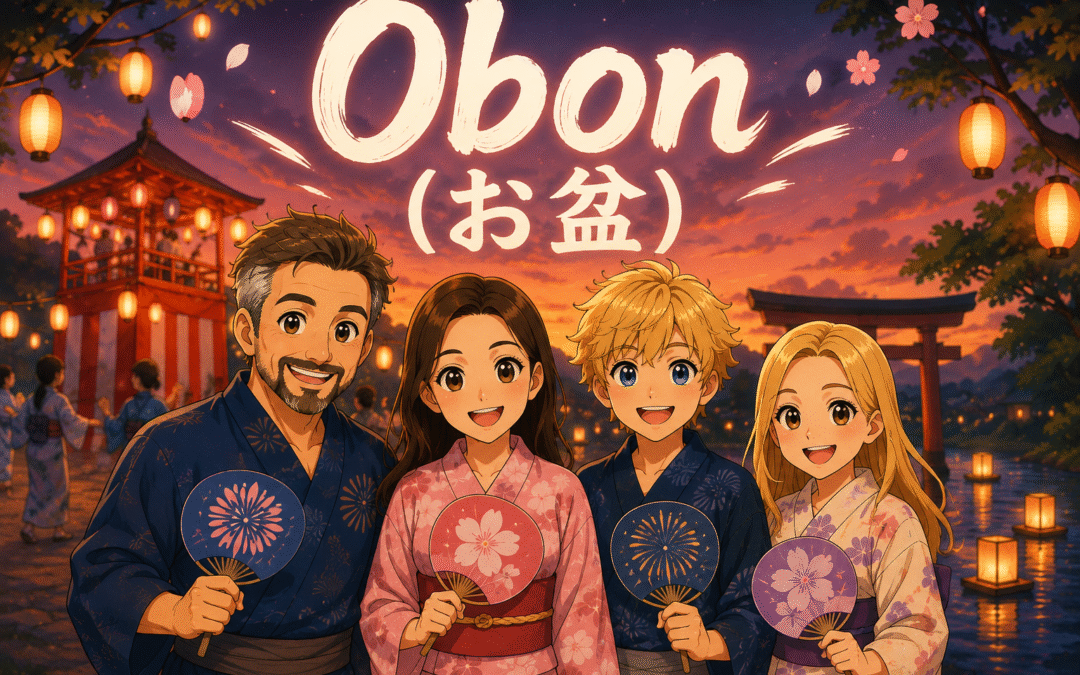
Summer in Japan has a special atmosphere. The sound of cicadas fills the afternoons, lanterns glow as the sun goes down, fireworks brighten the night sky, and summer festivals bring families and communities together.
Among Japan’s most meaningful summer traditions is Obon (お盆), a time when families honor and remember their ancestors.
For visitors to Japan, Obon can also be a fascinating opportunity to experience traditions that have been passed down through generations. From enormous mountainside fires to lively street dancing—and, of course, plenty of seasonal food—there is much more to Obon than you might expect.
Here are a few of the traditions that make this time of year so special.
What Is Obon?
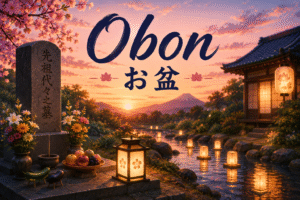
Obon is a Japanese Buddhist tradition centered around remembering and honoring ancestors. It is commonly believed that during Obon, the spirits of ancestors return to visit their families.
For many people, that makes Obon an important time for family reunions, remembrance and gratitude.
Families may return to their hometowns, visit graves, make offerings and spend time together. You may also see lanterns used symbolically to welcome ancestral spirits and later guide them on their return journey.
But Obon isn’t only a quiet observance. Some of Japan’s most colorful summer celebrations are associated with the season.
Bon Odori: Dancing Together on Summer Nights
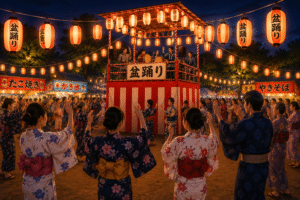
If you’ve ever imagined a traditional Japanese summer festival filled with people wearing yukata and dancing beneath glowing lanterns, you may be picturing Bon Odori (盆踊り).
Bon Odori, or the Bon Dance, is traditionally performed to welcome and entertain ancestral spirits.
At many festivals, people dance in a circle around a raised wooden platform called a yagura. One of the nicest things about Bon Odori is its community atmosphere. You don’t necessarily need to be an expert dancer to enjoy the experience. Watching everyone move together on a warm summer evening is part of the fun.
Awa Odori: Tokushima’s Famous Dance Festival
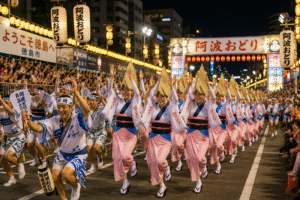
For dancing on a much larger scale, there’s Awa Odori in Tokushima.
Held during the Obon season in mid-August, this enormous dance festival features groups of dancers parading through the streets.
Colorful costumes, traditional music and energetic dancing transform the city into a huge celebration. It’s one of those events that shows how Japanese traditions can be both deeply rooted in history and wonderfully lively at the same time.
Gozan no Okuribi: Fire Across the Mountains of Kyoto
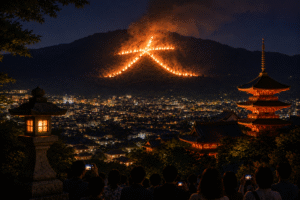
One of the most visually dramatic Obon traditions takes place in Kyoto.
On August 16, huge bonfires are lit on the mountains surrounding the city during Gozan no Okuribi (五山送り火).
The fires create enormous symbols—including giant kanji—that can be seen from across Kyoto.
Rather than welcoming the spirits, this tradition marks the end of their Obon visit and symbolically sends them back to the spirit world.
Imagine looking across Kyoto at night and seeing a gigantic character made from fire glowing on a mountainside. It’s an unforgettable example of the scale and beauty of Japanese seasonal traditions.
Lanterns Lighting the Way
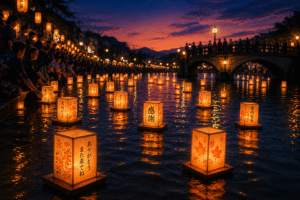
Light is another recurring symbol during Obon.
Traditions such as Toro Nagashi involve illuminated paper lanterns floating along rivers or out toward the sea. Shoro Nagashi, particularly associated with Nagasaki, also uses lanterns as part of sending ancestral spirits on their return journey.
The sight of warm lantern light reflecting across dark water can be incredibly beautiful.
And What Do People Eat During Obon?
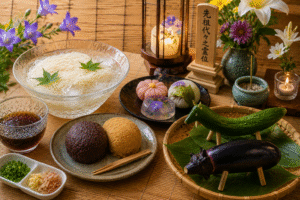
Naturally, we can’t talk about a Japanese celebration without talking about food!
There isn’t one universal “Obon meal,” but several foods and customs are closely associated with the season.
Somen, thin noodles served cold, are especially refreshing during Japan’s hot and humid summer. Ohagi or botamochi, rice sweets commonly covered with sweet red bean paste or other coatings, may also be enjoyed or offered.
Beautiful wagashi, traditional Japanese sweets, can reflect seasonal colors, flowers and other elements of Japanese culture.
One of the most interesting Obon food traditions, however, isn’t necessarily meant to be eaten at all!
Families may make shoryo-uma from a cucumber and shoryo-ushi from an eggplant by adding small legs to create miniature animals. Traditionally, these represent vehicles used by ancestral spirits—the cucumber horse allowing them to return quickly and the eggplant cow helping them depart more slowly.
It’s a wonderfully memorable example of the symbolism found throughout Japanese traditions.
Sharing More Than Japanese Snacks
This connection between food, seasons and culture is one of the things we love most about living in Japan—and something we try to share through Freedom Japanese Market.
Our monthly boxes aren’t designed to be simply a random collection of candy. We include a mixture of traditional wagashi, quirky dagashi, DIY kits, popular treats, and limited-edition or regional snacks, with themes inspired by Japanese seasons, holidays and traditions. Each box also includes an English guide with snack information, allergens and fun facts about Japan.
We’re still a small family business based in rural Japan. We personally source, pack and ship our boxes rather than sending the job to a large third-party warehouse. That personal approach has been part of Freedom Japanese Market since our early days, when what eventually became our snack subscription service grew from Japanese fukubukuro lucky bags filled with assorted treats.
Today, every box also includes international tracking so customers can follow their package on its journey from Japan.

Bring a Little Bit of Japan to Your Front Door
We hope you’ll have the opportunity to experience Obon in Japan someday: join a Bon Odori, see the lanterns glowing at night, taste some summer treats and experience the wonderful atmosphere of a Japanese summer.
But if a flight to Japan isn’t in the plans just yet, we’ll happily send a little taste of Japan in your direction.
🇯🇵 Join Freedom Japanese Market and start your own Japanese snack adventure—hand-packed by our family in Japan and delivered right to your front door.
And we’d love to hear from you: Which Obon tradition would you most like to experience in Japan?