
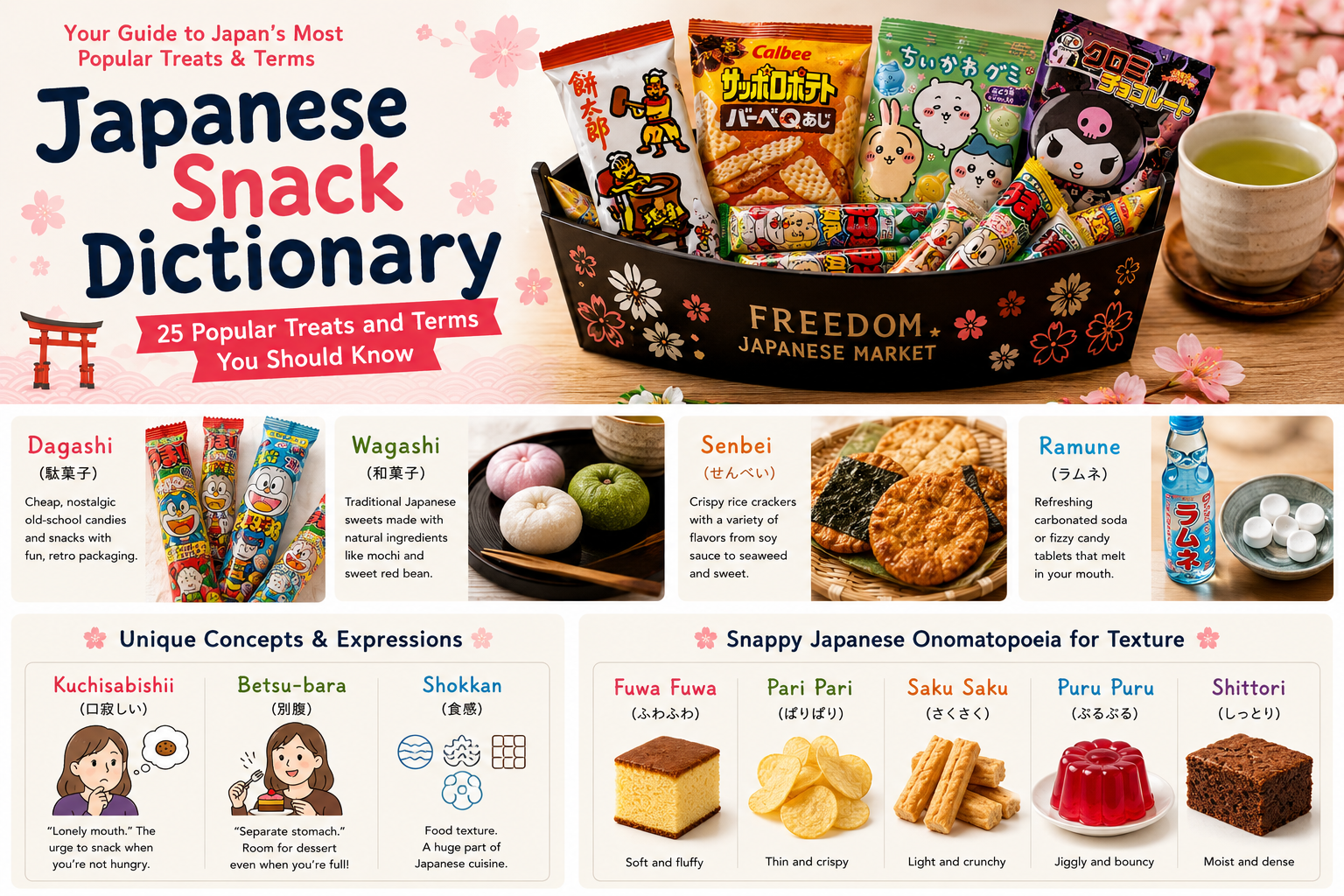
If you’ve ever opened a Japanese snack box and wondered, “What exactly is dagashi?” or “Why does everyone keep talking about wagashi?” you’re not alone!
Japan has a rich snack culture filled with unique treats, traditions, and even special words dedicated to the art of snacking. Some terms describe specific types of Japanese candy, while others capture the feeling of craving a snack when you’re not even hungry.
Whether you’re planning a trip to Japan, learning about Japanese culture, or exploring your monthly Freedom Japanese Market box, this Japanese Snack Dictionary will help you sound like a snack expert in no time.
Let’s dig in!
What is Okashi (お菓子)?
Okashi is the general Japanese word for sweets, snacks, candy, and confections.
If someone asks, “What kind of okashi do you like?” they’re simply asking what snacks or sweets you enjoy.
Everything from chocolate bars and gummies to traditional Japanese sweets falls under the umbrella of okashi.
What is Oyatsu (おやつ)?
Oyatsu means “snack” and is most commonly associated with the afternoon snack enjoyed around 3 PM.
The word originally referred to the “eighth hour” of the day according to an old Japanese timekeeping system.
Today, children and adults alike look forward to oyatsu time as a chance to enjoy a small treat between meals.
What is Dagashi (駄菓子)?
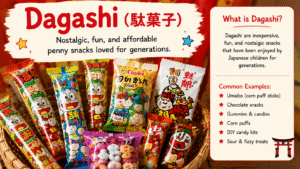
One of the most beloved categories of Japanese snacks is dagashi.
Dagashi are inexpensive, fun, nostalgic snacks that have been enjoyed by Japanese children for generations.
You’ll often find:
- Tiny chocolates
- Fruit-flavored candies
- Corn puffs
- DIY candy kits
- Sour treats
- Novelty snacks
Many dagashi feature colorful packaging, quirky mascots, and playful designs that make them just as entertaining as they are delicious.
|
🎌 Curious about trying real dagashi for yourself? Every Freedom Japanese Market box includes a rotating selection of authentic Japanese snacks sourced directly from Japan, including nostalgic dagashi, seasonal treats, and regional specialties. |
What is Wagashi (和菓子)?
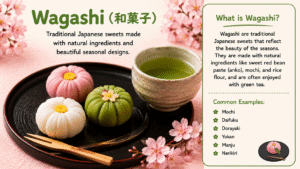
Wagashi are traditional Japanese sweets that have been enjoyed for centuries.
Unlike many Western desserts, wagashi often focus on subtle sweetness and natural ingredients.
Common ingredients include:
- Mochi (rice cake)
- Anko (sweet red bean paste)
- Chestnuts
- Matcha
- Sweet potatoes
Wagashi are often served during tea ceremonies and are designed to reflect the beauty of the seasons.
What is Senbei (せんべい)?
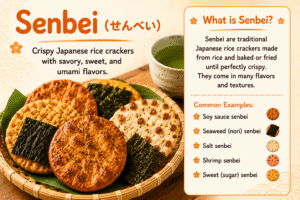
Senbei are traditional Japanese rice crackers.
These crispy treats can be:
- Sweet
- Salty
- Soy sauce flavored
- Seaweed wrapped
- Spicy
Many senbei are grilled rather than fried, giving them a satisfying crunch and rich roasted flavor.
What is Ramune (ラムネ)?
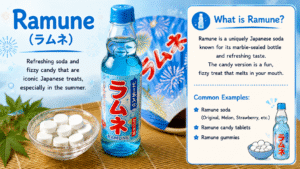
Ramune can refer to two different Japanese treats.
The first is Japan’s famous carbonated soda sealed with a marble inside the bottle.
The second is a small fizzy candy tablet that melts in your mouth and has a light citrus flavor.
Both versions are popular summer treats and are often associated with Japanese festivals.
What is Otsumami (おつまみ)?
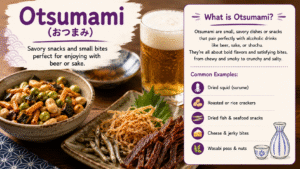
While many Japanese snacks are sweet, otsumami are savory snacks designed to be enjoyed alongside beer, sake, or other drinks.
Popular otsumami include:
- Dried squid
- Roasted nuts
- Rice crackers
- Edamame
- Seasoned seafood snacks
Think of them as Japan’s version of bar snacks.
Unique Japanese Snack Expressions
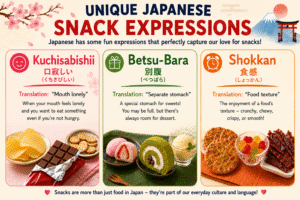
What is Kuchisabishii (口寂しい)?
This is one of the most relatable words in the Japanese language.
Kuchisabishii literally means “lonely mouth.”
It describes the feeling of wanting to snack even though you’re not actually hungry.
If you’ve ever wandered into the kitchen looking for something to munch on after dinner, you’ve experienced kuchisabishii.
What is Betsu-bara (別腹)?
Ever been completely full but somehow still had room for dessert?
The Japanese have a word for that too.
Betsu-bara means “separate stomach.”
It’s the magical extra stomach reserved exclusively for sweets and desserts.
Science may disagree, but every dessert lover knows it’s real.
What is Shokkan (食感)?
When it comes to Japanese snacks, taste is only half the experience.
Shokkan refers to texture, and it plays a huge role in Japanese food culture.
Many Japanese snack makers carefully design products around their unique textures.
The crunch, chew, fluffiness, or crispness of a snack is often just as important as its flavor.
Fun Japanese Texture Words You Might Hear
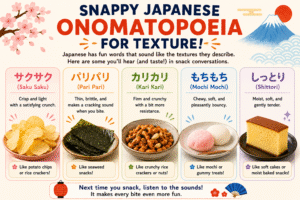
Fuwa Fuwa (ふわふわ)
Soft, fluffy, and airy.
Think sponge cake, fluffy pancakes, or light marshmallows.
Pari Pari (ぱりぱり)
Thin and crispy.
Perfect for potato chips, seaweed snacks, and delicate crackers.
Saku Saku (さくさく)
Light, crunchy, and pleasantly crisp.
A common description for cookies, biscuits, and tempura.
Puru Puru (ぷるぷる)
Jiggly and bouncy.
Used for jelly, pudding, and gelatin desserts.
Kari Kari (カリカリ)
Firm and crunchy.
Used for rice crackers or nuts.
Mochi Mochi (もちもち)
Chewy, soft, and pleasantyly bouncy.
Used for gummy treats or mochi.
Shittori (しっとり)
Moist, rich, and dense.
Often used to describe cakes, brownies, and baked sweets.
Why Japanese Snacks Are So Unique
One thing that makes Japanese snacks special is the attention paid to seasonality, presentation, and texture.
Japanese snack makers constantly release limited-edition flavors inspired by:
- Cherry blossom season
- Summer festivals
- Autumn harvests
- Winter holidays
Combined with Japan’s love of unique textures and creative flavors, every snack becomes a small cultural experience.
That’s one of the reasons we enjoy sharing authentic Japanese snacks through Freedom Japanese Market. Every box offers a chance to discover new flavors, learn new words, and experience a little piece of everyday life in Japan. Our family lives and works in Japan, and we are excited to share all the treats we love with you!
Now that you’ve mastered these Japanese snack terms, you’re officially one step closer to becoming a Japanese snack expert!